Half-day: preparing a project
Reminder of the objective and constraints · workshop in sub-groups on tasks and risks · break · pooling ideas and making the call · action list with owners. Record: the list, reviewed at the progress check.


novembre 26, 2026

To prepare a decision or a launch: a workshop built around a real project, with the decision-makers in the room. To bring teams together: a cooperative challenge in mixed teams. To bond a group without leaving anyone out: a low-key competition such as a pétanque tournament. To share a moment: a shared table or a cooking workshop. To broaden horizons: a cultural visit or a day at sea. Then choose the length: a half-day for a well-defined topic, a full day to combine work and an activity, a stay of two or three nights when there are several topics to cover and informal conversations matter.
You have been asked to put forward a retreat and you need an idea that will stand up in front of your leadership team, not just another activity. The right method comes down to three questions: what should the group have produced by the end, which activity serves that objective, and over how long. The ideas below are sorted by objective, with what each asks of participants, the preparation it requires and its limits. Corfu comes up where the format suits it, since that is where we organise ours.
To give you a sense of scale, here are the figures from a retreat we organised in October 2026, departing from Nantes, in France:
A decision made, a project launched, two teams who now know each other, a year rewarded. Put it in one sentence. If you can't, no idea will be the right one.
An activity is no substitute for time spent on a decision. If a decision is expected, set aside a structured slot for it, with the right people and the information they need, and add the activity on top. If the objective is about relationships, the activity can take up most of the time.
Ages, fitness, appetite for competition, dietary requirements, language. An idea that leaves a third of the group on the sidelines is not a good idea, however clever it is.
The group works on a concrete topic (clarifying a launch, weighing up options, drafting a first roadmap) using simple techniques: structured brainstorming, mapping tasks and risks, rapid prototyping. Its limit is clear-cut: without the decision-makers or without data, the workshop produces nothing. In Corfu, it takes place in the morning, in a hotel meeting room, before an activity in the afternoon.
A trail or a series of puzzles in mixed teams, where nobody wins alone. Its limit: it serves a relationship goal, not a need for a decision, and you need to plan a less exposed role for those who don't enjoy competition. Our treasure hunt in Corfu Old Town works this way, lasting from 1 hr 30 min to 3 hr, with clues and cultural puzzles.
A tournament where fitness doesn't matter. Pétanque is the most inclusive example we know: in pairs or threes, everyone has a chance, and conversations start between two ends. Its limit: it is time to socialise, not to work. Our pétanque challenge, facing the old harbour, welcomes 8 to 48 people.
Teams prepare a menu together and then sit down to eat it, or gather around a private dinner. This is the format for leadership teams and small groups who want to talk. Our mezze dinner in an olive grove seats up to 25 people.
A visit, followed by an open discussion about what each person took away from it. Its limit: if work needs to stay at the centre, the visit shouldn't fill the whole day. Corfu's UNESCO-listed historic centre lends itself to this in two hours.
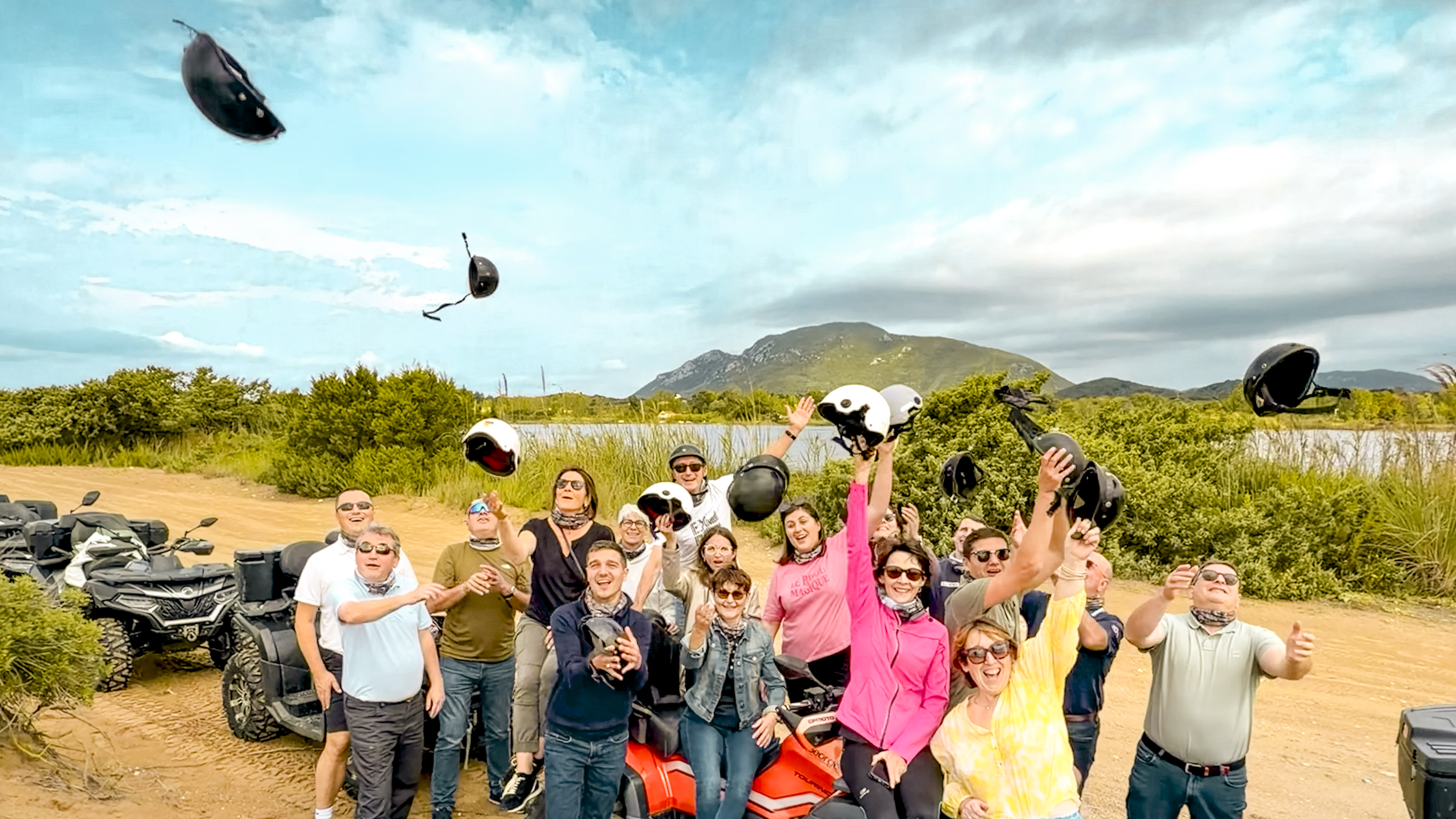
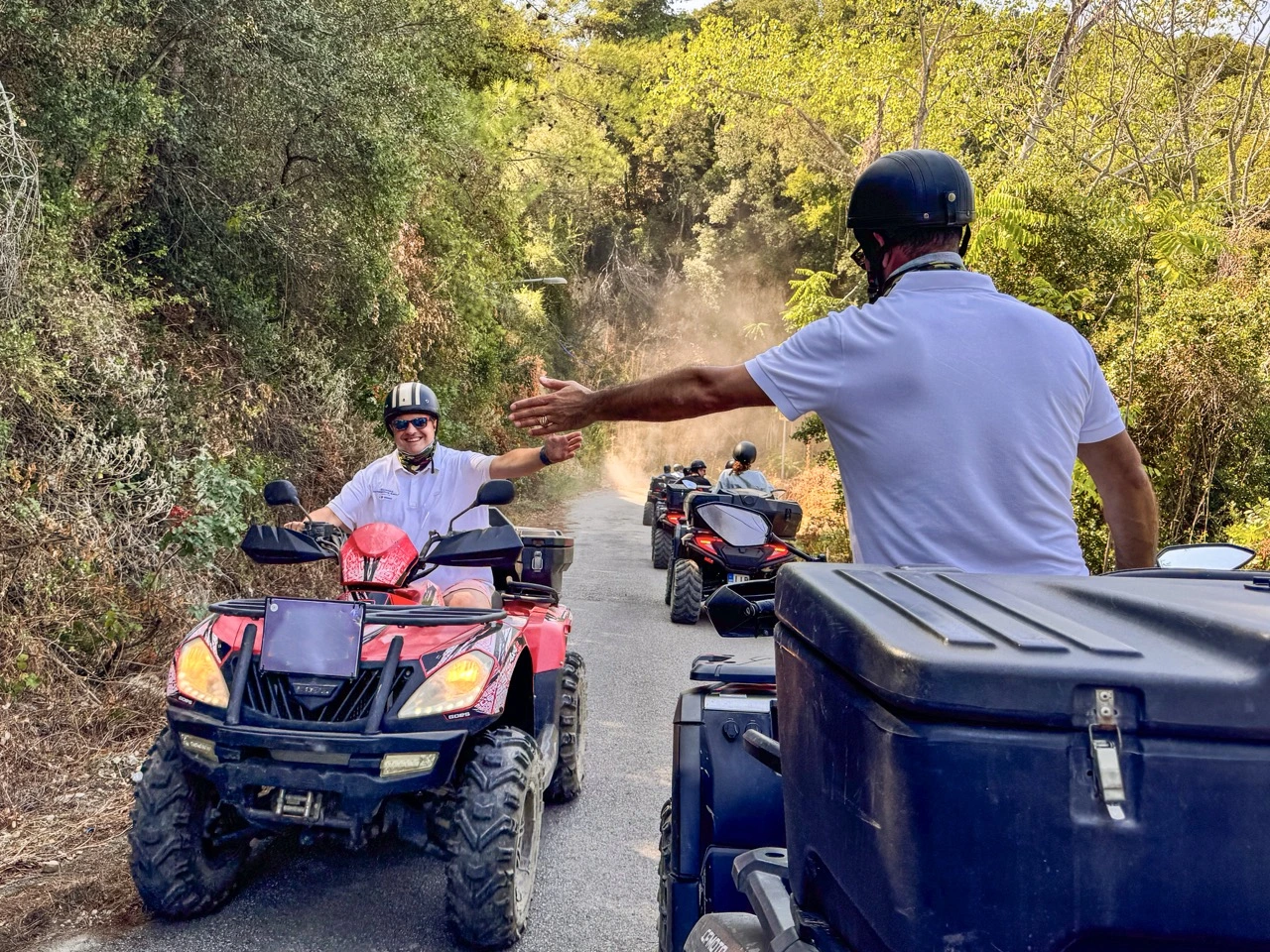
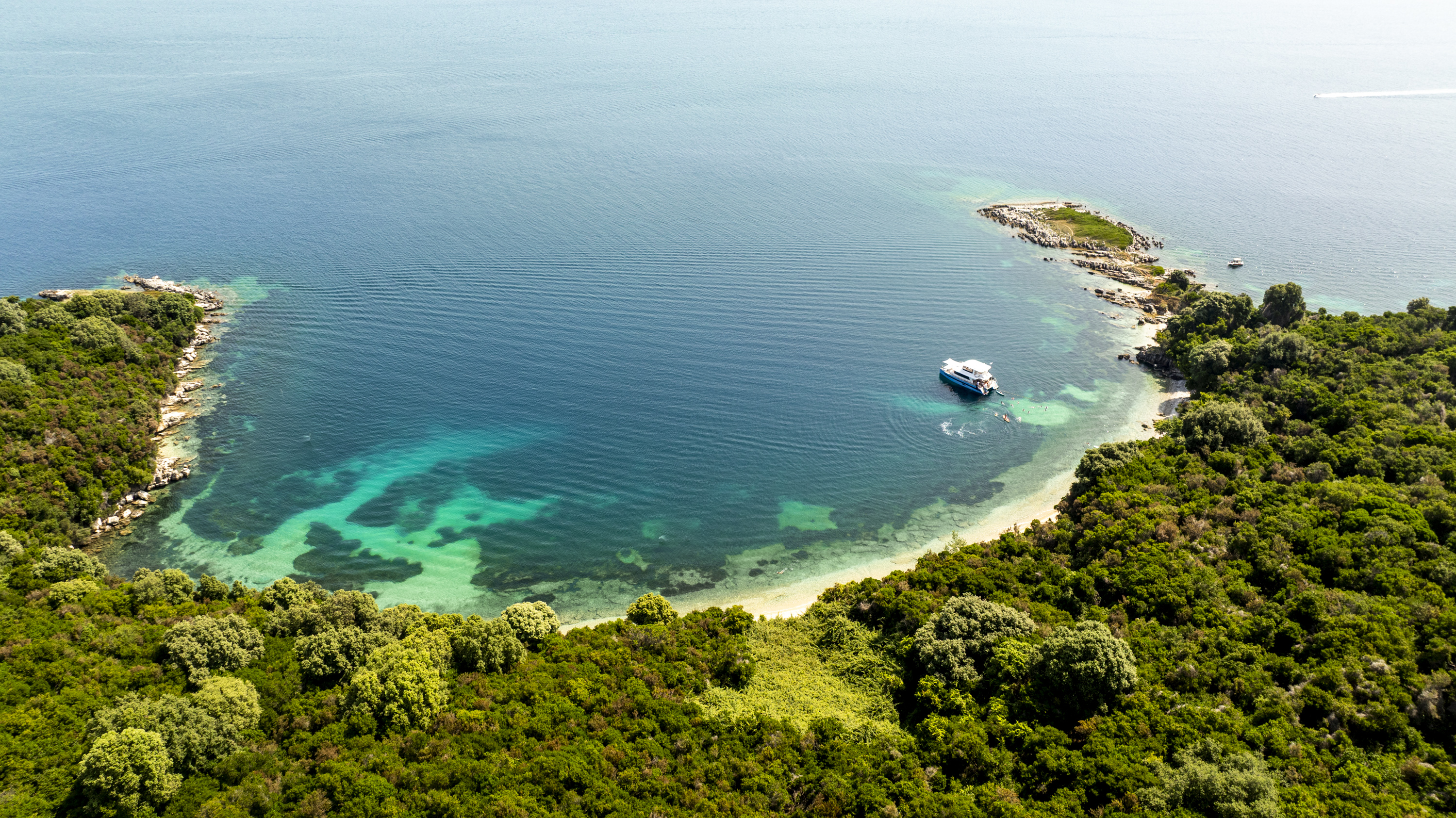
A day at sea, a coastal hike or a quad bike outing. This is the classic incentive trip format, best kept for a reward or a real break. Our catamaran trip to Paxos lasts six hours; the hike and the quad bike tour can be paired with a gentler option on the same day.
| Priority | Idea to look at first | Alternative | Condition to check |
|---|---|---|---|
| Reaching a decision | Workshop built around a project | Working day with a short activity | Decision-makers present, information available |
| Launching a project | Workshop with a roadmap | Workshop followed by a group creative session | Roles clarified before the meeting |
| Getting to know each other | Cooperative challenge in mixed teams | Cultural visit with discussion | Less exposed roles for the reluctant |
| Bonding a group | Low-key competition | Shared table | No fitness required |
| Rewarding | Day outdoors | Gala dinner | Bad-weather alternative, transfers |
Can a fun activity replace a decision-making workshop?
No. A game or a group creative session serves a relationship goal, not a need for a decision. If a decision is expected, set aside structured working time with the right people and the information they need, then add the activity on top. That is the order most of the retreats we organise follow: work in the morning, activity in the afternoon.
| Format | It works when | Provided that |
|---|---|---|
| The half-day | The topic is well defined: one well-prepared session is better than three back to back | The journey doesn't take longer than the useful time |
| The full day | You need to combine working time and an activity | You handle the transitions with care: a real break between the two, a debrief at the end |
| A stay of two or three nights | Several topics need covering and informal conversations matter: decisions are often made over dinner, not in the meeting room | You confirm transport, accommodation and availability |
In Corfu, we recommend a three-night stay, Thursday to Sunday, 2 hr 45 min by air from Paris; our guide explains how to organise a corporate retreat step by step, and our article on Corfu in October helps you choose when to go.
Reminder of the objective and constraints · workshop in sub-groups on tasks and risks · break · pooling ideas and making the call · action list with owners. Record: the list, reviewed at the progress check.
Welcome · teams present each other's roles · break · cooperative challenge in mixed teams · debrief on what everyone learned · next steps. Record: a summary of what each team expects from the others.
Day 1: late-morning arrival from Nantes, lunch by the sea, guided tour of the Old Town, private sunset cruise, fresh fish dinner. Day 2: a full day of off-the-beaten-track quad biking, mezze evening in an olive grove with a chef. Day 3: villages and local produce with a guide, private dinner on a beach. Day 4: morning flight, landing at 13:00. No working sessions: this is the incentive format; if a decision is expected, add a working session each morning.
Worth remembering
A retreat combines three things to keep apart: the expected outcome, the activity that serves it, and the length. An activity is no substitute for a decision. And the most successful programme is rarely the busiest: leave room for transitions, and lighten the load if travel cuts into the time available.
For each shortlisted idea, check six points: the participation required, the preparation, the physical effort, dietary requirements, transport and the fallback in case of bad weather. An idea where one essential condition remains incompatible with the group should be dropped. A label saying “suitable for everyone” proves nothing: ask what it actually means.
Before you present your proposal
How do you allow for participants who are less comfortable with active pursuits?
Not everyone will want to take centre stage. Vary the formats over the stay, plan less exposed roles and explain the brief in advance. Don't impose the same level of participation on everyone, especially for a creative or physical activity: a cooperative challenge needs a strategist as much as a runner.
We held our retreat in Corfu in September and it was well worth it: they know the island inside out and put together a programme that matched exactly what we wanted. The team was delighted.
For fewer than ten people, a working session followed by a shared table: the small numbers allow a real discussion, and a private dinner carries the work on without interrupting it. Large competitive formats lose their appeal below eight participants.
No, but getting away matters: a group that sleeps somewhere else talks differently. A three-day stay less than three hours' flight away, such as Corfu from Paris, offers a change of scene without an endless journey, often at a cost comparable to a French destination in high season.
It all depends on how much work is involved. For a retreat where a decision is expected, one main activity and one evening event: the rest of the time goes to work, meals and breathing space. For an incentive, where the experience is the objective, the pace can rise to one experience per half-day, as in the real programme above, provided you keep some free time each day.
Based in Corfu year-round, Constance and Michaël build the programme around your objective, not from a catalogue: working sessions, an activity chosen for the group, accommodation and transfers. See our page on corporate retreats in Corfu and our ideas for team building in Corfu.
Torn between two ideas?Tell us your objective, group size and dates: we will send you a programme within 48 hours.
Tell us about your projectFurther reading